

Introduction
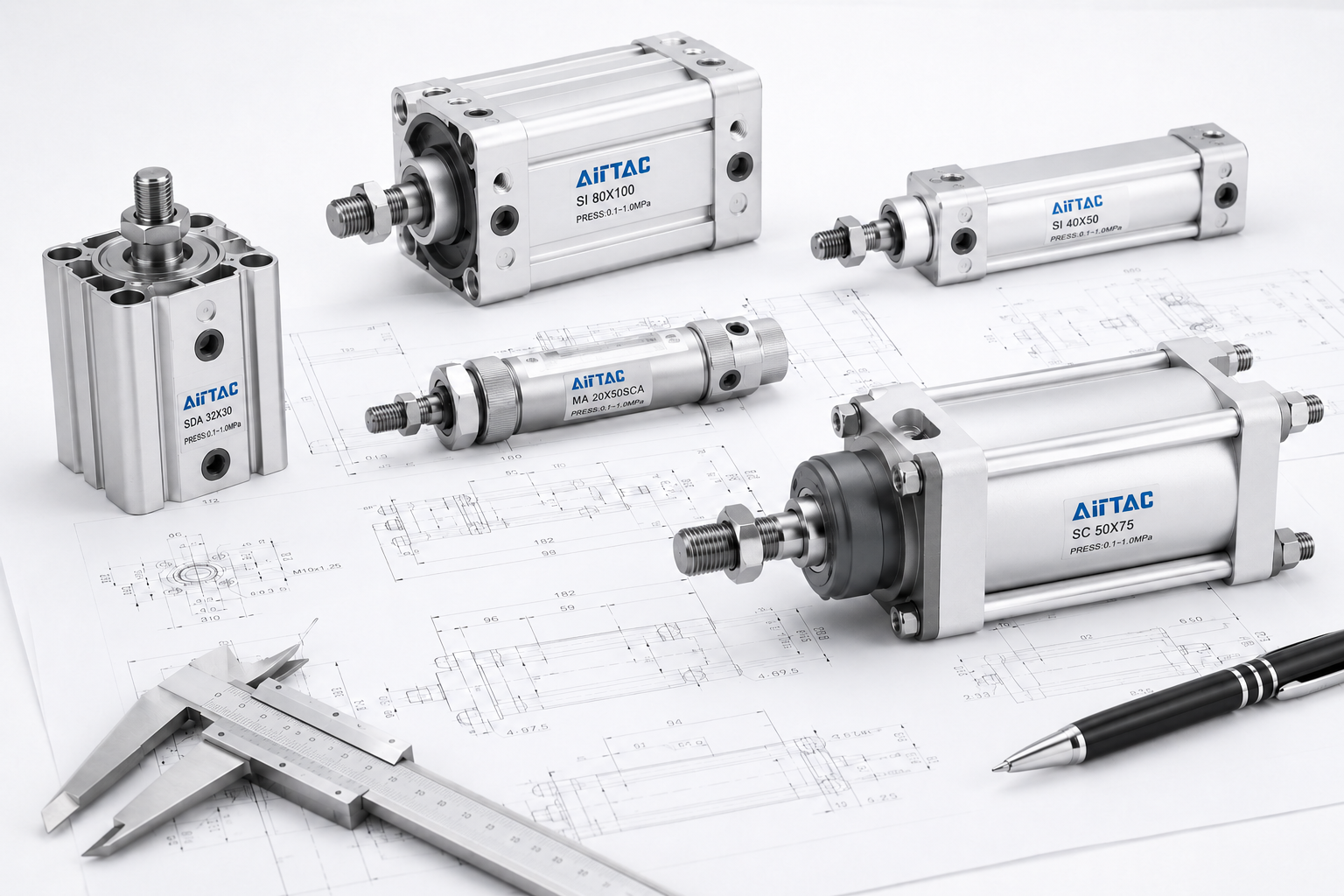
Pneumatic cylinders are among the most commonly used motion control components in industrial automation. From packaging machines and assembly systems to material handling equipment and special-purpose machinery, they play a vital role in converting compressed air into reliable linear motion.
Choosing the right pneumatic cylinder is essential for achieving efficient performance, reducing downtime, and extending equipment life. Factors such as load requirements, stroke length, operating pressure, mounting style, and environmental conditions must all be considered before making a selection.
This guide explains the key considerations for selecting the ideal AirTAC pneumatic cylinder for your application.
Understanding Pneumatic Cylinders
A pneumatic cylinder is a mechanical actuator that uses compressed air to create force and motion. These cylinders are widely used due to their simplicity, reliability, cost-effectiveness, and ease of maintenance.
They are commonly found in:
- Packaging Machinery
- Conveyor Systems
- Material Handling Equipment
- Pick & Place Systems
- Assembly Automation
- Food Processing Equipment
- Pharmaceutical Machinery
Types of Pneumatic Cylinders
Standard Cylinders
Standard cylinders are designed for general-purpose industrial applications and offer reliable performance across a wide range of automation systems.
Ideal for:
- Assembly Lines
- Packaging Machines
- Conveyor Systems
Compact Cylinders
Compact cylinders provide the same functionality as standard cylinders but require significantly less installation space.
Ideal for:
- Electronics Manufacturing
- Compact Automation Systems
- Pick & Place Equipment
Rodless Cylinders
Rodless cylinders are suitable for long-stroke applications where conventional cylinders may not be practical.
Ideal for:
- Material Transfer Systems
- Automated Handling Equipment
- Packaging Automation
Guided Cylinders
Guided cylinders provide additional stability and accuracy when handling off-center loads.
Ideal for:
- Precision Assembly
- Loading Systems
- Robotics Applications
Key Factors to Consider
1. Load Capacity
The cylinder must generate enough force to move the intended load safely and efficiently.
2. Stroke Length
Choose a stroke length that matches the required travel distance while avoiding excessive movement.
3. Operating Pressure
Air pressure directly affects cylinder performance and force output.
4. Installation Space
Space limitations often determine whether a standard, compact, or rodless cylinder is the best option.
5. Mounting Requirements
Proper mounting improves performance, alignment, and equipment longevity.
Benefits of AirTAC Pneumatic Cylinders
AirTAC cylinders are trusted by manufacturers worldwide due to their:
- Reliable Performance
- High Manufacturing Quality
- Long Service Life
- Wide Product Range
- Easy Installation
- Cost-Effective Operation
These advantages make AirTAC an excellent choice for industrial automation projects.
Common Applications
AirTAC pneumatic cylinders are widely used in:
Packaging Industry
Product movement, sealing, and carton handling.
Automotive Manufacturing
Assembly operations and automated production lines.
Electronics Industry
Precision handling and compact automation systems.
Food Processing
Reliable motion control in hygienic environments.
Machine Building
Integration into custom industrial machinery.
Conclusion
Selecting the right pneumatic cylinder is critical for achieving efficient and reliable automation performance. By understanding application requirements, load conditions, stroke length, and operating environments, manufacturers can choose a solution that delivers long-term value and operational efficiency.
AirTAC offers a comprehensive range of pneumatic cylinders designed to meet the demands of modern industrial automation systems.

Hi, this is a comment.
To get started with moderating, editing, and deleting comments, please visit the Comments screen in the dashboard.
Commenter avatars come from Gravatar.